Why Early Grooming Experiences Matter So Much
Dogs are most receptive to new experiences during a critical socialisation window that runs roughly from three to sixteen weeks of age. During this period, positive exposure to handling, different surfaces, sounds, and environments shapes how a dog interprets and responds to those things for the rest of their life.
Grooming — which involves handling the entire body, running equipment close to sensitive areas, and managing restraint — falls squarely into the category of things that dogs can learn to accept and even enjoy, or things that can become a source of ongoing anxiety. The difference between those two outcomes often comes down to how the first experiences are managed.
This doesn't mean that puppies missed in their early socialisation window can't be helped — they absolutely can, and many anxious adult dogs do learn to tolerate and eventually accept grooming with patient, consistent work. But early starts are genuinely valuable, and setting up positive associations from the beginning is the easiest path to a dog who is cooperative and calm throughout their grooming life.
Handling at Home: Before Any Tools Come Out
The best preparation you can give your puppy for professional grooming happens at home, before they ever visit a salon. Puppies who are regularly handled — including touching their paws, ears, mouth, and underside — develop a baseline comfort with being examined that translates directly to how they feel in a grooming context.
Start handling your puppy regularly from the day they come home. Keep it low-key and paired with praise. Touch their paws and toes, gently hold each foot for a few seconds, run your fingers between their toes. Open their mouth briefly. Examine their ears. Touch their tail, their belly, their flanks. None of this needs to be prolonged or formal — a few minutes during a quiet moment, done regularly, builds habituation over time.
The goal isn't to hold your puppy still or desensitise them to discomfort — it's to teach them that being touched and examined by you is completely normal and never results in anything unpleasant. This kind of early handling is one of the best investments of time you can make in a new puppy's long-term wellbeing.
Introducing Grooming Tools at Home
Before booking your puppy's first professional appointment, introducing them to grooming tools at home is worthwhile. The goal at this stage is entirely about familiarity — not performance. You're not trying to groom the puppy; you're teaching them that brushes, combs, and nail clippers are unremarkable objects that don't predict anything negative.
Start by simply leaving grooming tools on the floor near your puppy. Let them sniff and investigate in their own time. Once they're comfortable approaching the items, pick up the brush and touch it gently to their coat — even just for a second — then reward. Over several short sessions, gradually extend the duration of brushing. Keep the energy calm and matter-of-fact. If your puppy becomes squirmy or mouthy, the session has gone on too long. End it, wait for a calmer moment, and start again with a shorter duration next time.
The same principle applies to the sound of clippers. If your puppy's breed will require clipping, letting them hear clippers running (at a distance initially, gradually closer) before they're used on the coat can prevent the startled, defensive responses that often develop when dogs first encounter the sound as an adult.
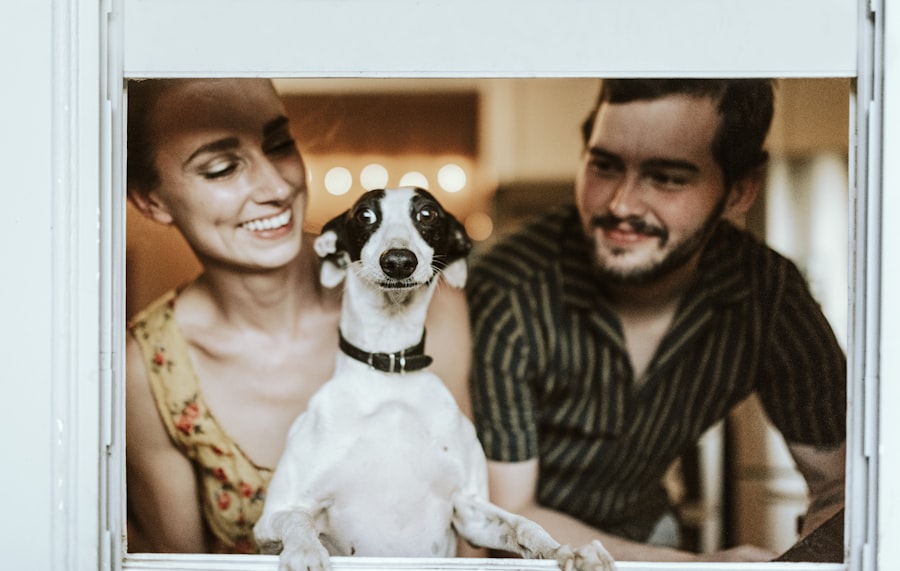
Short, positive handling sessions at home lay the groundwork for professional grooming success.
The First Puppy Bath at Home
Most puppies should have their first bath at home before their first professional grooming visit. It's a good opportunity to introduce the sensation of water, the smell of shampoo, and the experience of being wet in a safe, familiar environment where you can control the pace entirely.
Use a shallow basin or sink if possible, so your puppy doesn't feel overwhelmed by a full-sized bathtub. Use lukewarm water and a gentle, puppy-safe shampoo. Keep the first experience short — even just getting their feet wet and a brief rinse-down is a success. Follow immediately with drying, cuddles, and a treat.
Expect your puppy to be uncertain or wiggly — this is completely normal. The key is to keep the experience gentle and positive rather than efficient. A thorough bath isn't the goal at this stage; a calm experience is.
What Is a Puppy Introduction Session?
A puppy introduction session at a professional grooming studio is a different thing to a full groom. At Klippers, these sessions are specifically designed around the puppy's comfort and familiarisation, not around achieving a particular grooming outcome.
A typical introduction session might include: letting the puppy explore the studio space at their own pace, introducing the sound of dryers and clippers from a distance, handling the paws and coat with hands first, a brief brush, and possibly a light bath if the puppy is settled enough to enjoy it. There's no pressure to complete a full groom in one visit.
The value of this kind of session isn't the grooming — it's the association. A puppy who leaves a grooming studio calm, having had a positive experience, is building a mental model of grooming studios as safe, manageable places. That model strengthens with each subsequent visit.
We recommend bringing puppies in for an introduction session as soon as they've completed their initial vaccination schedule and been cleared by a vet for public outings — typically around twelve to sixteen weeks. The earlier these associations are established, the better.
Managing Anxiety in Puppy Grooming
Some anxiety in new situations is completely normal for puppies and shouldn't be mistaken for a grooming problem. A puppy who trembles slightly at new smells, looks uncertain at unfamiliar sounds, or needs time to settle before they can be handled is a normal puppy — not a difficult one.
The response to this kind of anxiety should always be patience and reduced pressure, never force. Forcing an anxious puppy through an experience they're not ready for doesn't teach them the experience is safe — it teaches them that being in that situation means being handled in ways that feel out of their control. That's a foundation for a much more entrenched anxiety problem in the future.
Signs that your puppy is uncomfortable during grooming include: rigid body posture, trembling, excessive panting (without exertion), yawning or lip-licking (stress signals), attempts to escape, or vocalisation. Any of these signals mean slowing down — reducing the handling, returning to familiar activities, and giving the puppy time to regulate before trying again.
Positive reinforcement — specifically, giving high-value treats during and immediately after handling — is the most effective tool available for building positive associations. The timing matters: the treat should come during the handling, not only after it stops. You're teaching the puppy that being handled predicts good things, not that the end of handling is what they're waiting for.
Breed Considerations for Early Grooming
The urgency of early grooming varies significantly by breed and coat type. For short-coated breeds, early grooming is largely about habituation to handling rather than managing a challenging coat. For curly, wavy, or long-coated breeds — Poodles, Cavoodles, Doodle crosses, Shih Tzus, Maltese — early and consistent grooming is genuinely important for coat health.
The puppy coat on many of these breeds transitions to the adult coat between six and fourteen months, and this transition period often brings significant matting risk. The puppy coat, which is softer and finer, tangles easily as it sheds and interleaves with emerging adult coat. Puppies of these breeds need regular brushing from early on — and ideally a professional groom at around five to six months — to navigate this transition period without coat damage.
For working dog breeds — Border Collies, Kelpies, German Shepherds — the grooming requirements are less demanding in terms of coat management but handling familiarisation is especially valuable, as these breeds tend to be physically alert and sensitive to restraint.
Building a Routine You Can Maintain
The most important thing about a puppy grooming routine is that it happens. Regularity matters more than perfection, and a brief daily touch — running your hands through the coat, checking the paws, examining the ears — keeps a puppy comfortable with handling and gives you the opportunity to notice any changes early.
As your puppy grows and their coat develops, their grooming requirements will evolve. The baseline of positive associations you establish in these early months will make that evolution manageable — both for you and for any groomer who works with your dog in the future.
Professional grooming appointments every six to eight weeks are a reasonable baseline for most coated breeds once your puppy has completed their initial vaccination schedule. For breeds requiring regular clipping, this interval keeps the coat manageable and maintains the positive associations built during early introduction sessions.
Frequently Asked Questions
Our puppy introduction sessions are designed specifically for young dogs experiencing professional grooming for the first time. Get in touch to discuss what would work best for your puppy's breed and temperament.
Book a Puppy Intro Session View Services